

20 min read
TL;DR: ADHD paralysis is the experience of being unable to start, decide, or move even when you genuinely want to — your brain hits overload and simply freezes. It’s not laziness or procrastination; it’s a stress-and-overwhelm response layered on top of executive-function differences in task initiation, working memory, and emotional regulation. It usually shows up in three forms — task paralysis, decision paralysis, and overwhelm (mental) paralysis — and the way out is to shrink the input: make the next action tiny, cut the number of choices, and lower the sensory and emotional load until your system can move again.
You’re sitting on the couch. There’s a mountain of things to do, you can feel the pressure building, and you want to get up and start — but your body won’t cooperate. You’re not relaxing. You’re not enjoying it. You’re stuck, watching yourself not move, while a quiet panic rises. If that’s familiar, you’ve met ADHD paralysis, and you’re not lazy, weak, or failing for experiencing it.
ADHD paralysis is one of the most misunderstood parts of the condition, partly because from the outside it can look like doing nothing on purpose. On the inside it’s the opposite: a brain so overwhelmed it has locked up.
Wondering if this freeze is ADHD — or what it’s costing you?
Take the free 4-minute self-check built for late-diagnosed women:
What makes it so disorienting is that the wanting and the not-doing happen at the same time. You’re not ambivalent — every part of you is yelling “just start” — and yet the gap between that desire and any action won’t close. That contradiction is precisely why “try harder” advice misses: the trying is already maxed out. This guide explains what’s actually happening, the three forms paralysis takes, why willpower can’t push through it, and the concrete moves that help you get unstuck.
What ADHD Paralysis Is
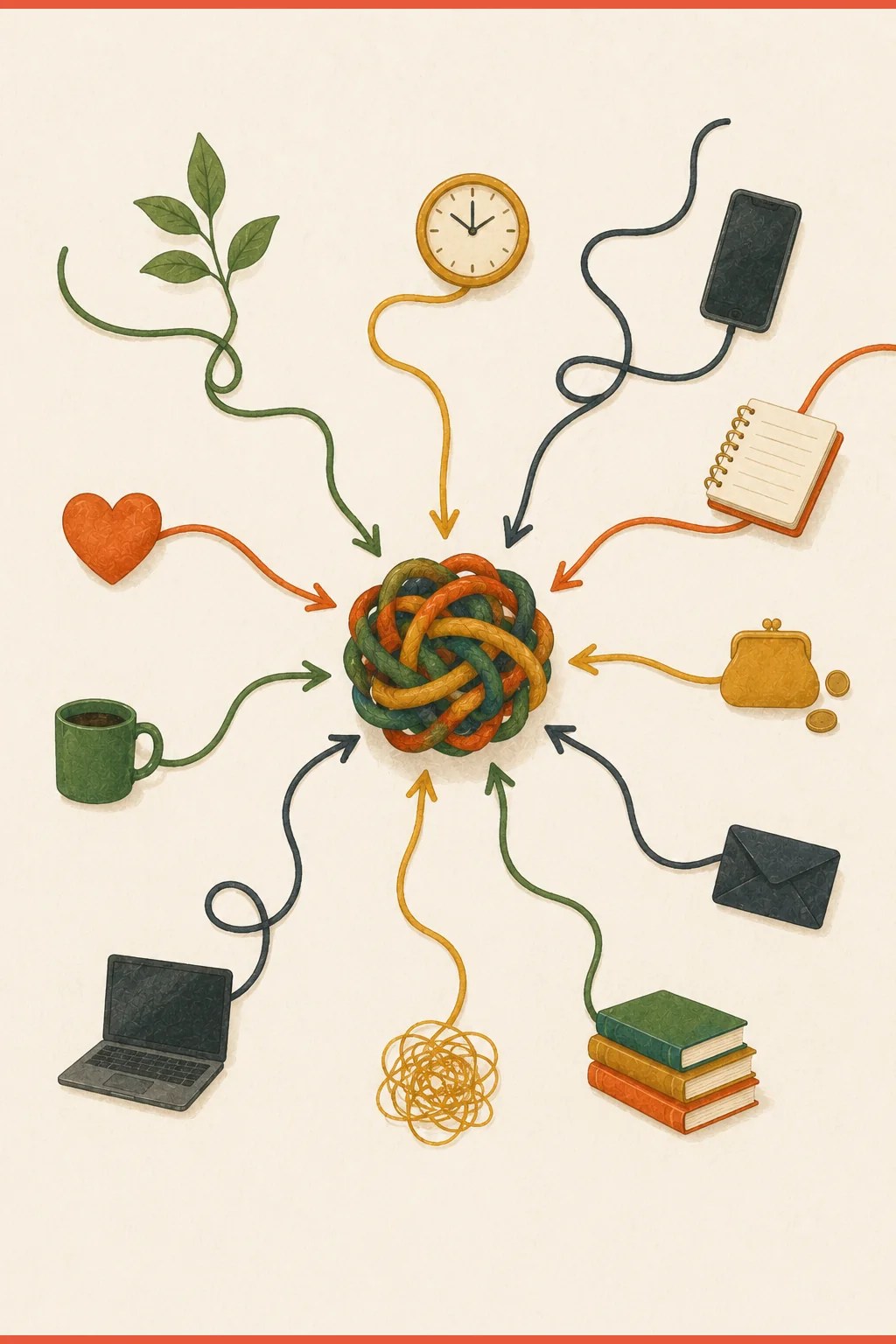
ADHD paralysis is the state of feeling frozen and unable to act despite wanting to — a kind of mental and physical lock-up that hits when the brain is overloaded. It’s not a formal medical diagnosis; it’s a widely recognized lived experience among people with ADHD, and a useful name for a real pattern. The defining feature is the gap between intention and ability: you know what to do, you want to do it, and you still can’t make yourself begin.
This gap is one of the cruelest parts of ADHD, because from the outside it’s invisible and easily misread as not caring. That misreading lands especially hard on women, who tend to internalize ADHD struggles as proof of personal failure rather than recognizing them as symptoms⁵ — so the frozen afternoons get filed under “I’m lazy and disorganized” instead of “my executive functions are overloaded.” Naming paralysis for what it is interrupts that story.
📗 Definition: ADHD Paralysis
ADHD paralysis describes a freeze response in which a person with ADHD becomes temporarily unable to start tasks, make decisions, or act, despite the desire to do so. It arises when executive-function demands and emotional overwhelm exceed what the brain can process in the moment, so the system stalls rather than acts. It is a recognized manifestation of executive dysfunction and overwhelm — not laziness, not a choice, and not the same as ordinary procrastination.
The Three Types of ADHD Paralysis
Paralysis tends to take one of three overlapping forms:
- Task paralysis. You have a specific thing to do — often something big, boring, or multi-step — and you cannot start it. You may circle it for hours, fully aware of the clock, unable to take the first action.
- Decision paralysis. Faced with options, you freeze. The more choices there are, the worse it gets — even small ones (“what should I eat?”, “which task first?”) can stall you completely, because every option spawns more sub-decisions.
- Overwhelm (mental) paralysis. When everything piles up at once, your brain hits capacity and shuts the doors. There’s so much to process that it can’t process anything, and you end up frozen in the middle of all of it.
Most people with ADHD recognize all three, sometimes within the same afternoon. They share one root: too much input, not enough processing bandwidth in the moment.
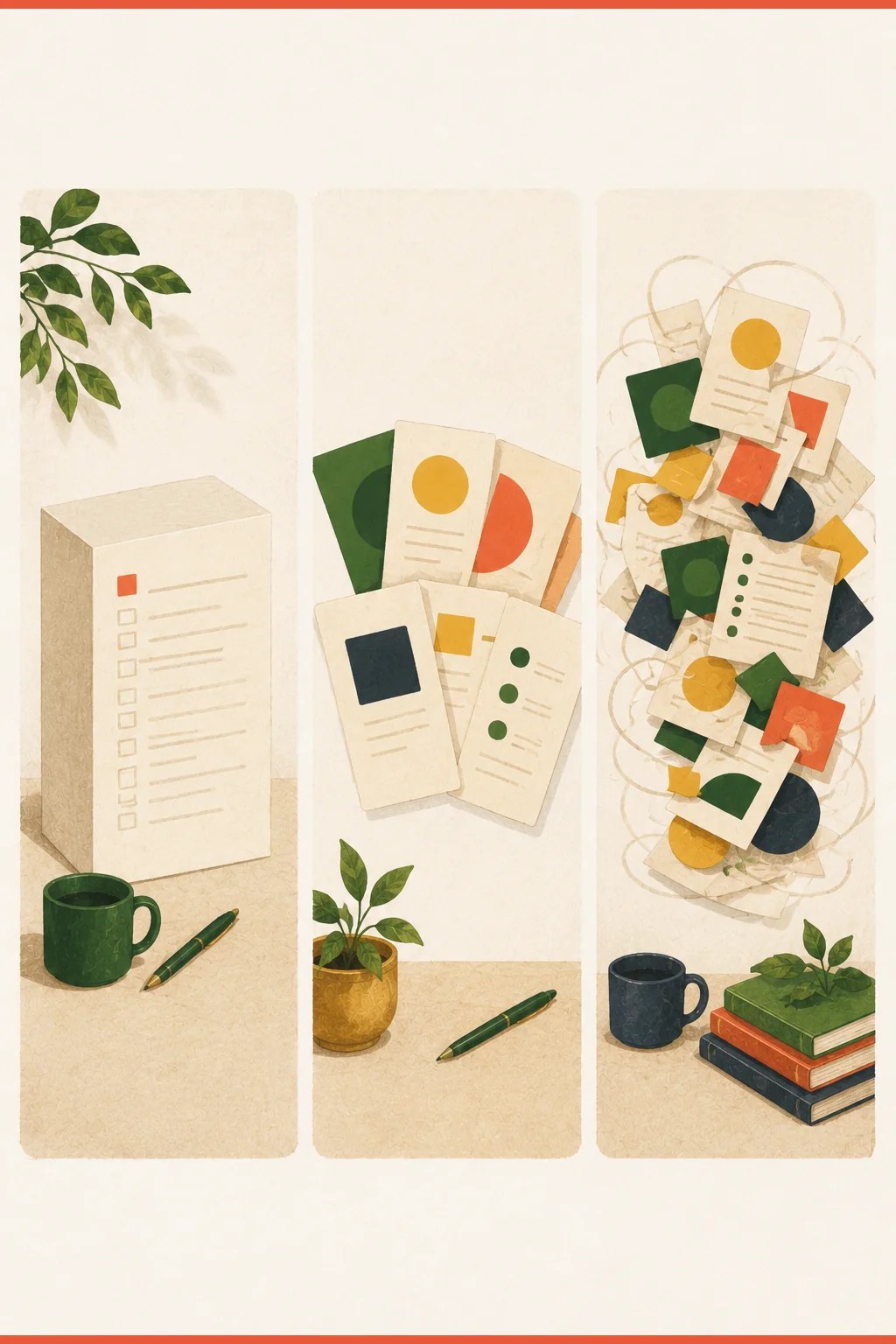
It’s worth noticing which type tends to catch you, because each has a slightly different lever. Task paralysis usually loosens when you shrink the first action small enough to be trivial. Decision paralysis eases when you shrink the number of options — removing choices rather than evaluating them. Overwhelm paralysis responds best to emptying — getting the swirling pile out of your head and onto a page so it stops occupying all your mental space at once. They blur together in practice, but matching the lever to the type means you waste less energy trying the wrong key in the lock. And in all three, the goal is the same modest one: not to finish, not to rescue your whole day, but simply to break the freeze and get one small thing moving. Once one thing moves, the next is almost always easier — momentum, not willpower, is what carries you out.
Why ADHD Paralysis Happens

Several ADHD-related differences stack up to produce the freeze:
- Task initiation is an executive function, and it’s one ADHD brains struggle with. Starting requires shifting from intention to action, and when that system is taxed, the shift doesn’t happen — you stay stuck at the starting line. The same dopamine-driven motivation difference that makes ADHD tasks hard to begin contributes here too.¹
- Working memory overloads quickly. Holding all the steps, options, and consequences in mind at once is demanding, and when too much is loaded at once, the system jams rather than juggles.
- Emotional overwhelm tips into a freeze response. ADHD brains feel emotions more intensely and regulate them less easily, so the anxiety a daunting task or decision generates can trigger the body’s freeze response — the same fight-flight-freeze survival reflex, pointed at your to-do list.²
- Too many choices demotivate. Classic research on “choice overload” found that when people were offered many options instead of a few, far fewer could actually decide and act — too much choice is paralyzing for anyone, and an ADHD brain reaches that tipping point faster.³
- Time feels abstract until it’s an emergency. ADHD brains tend to experience time as “now” and “not now,” so a task with no immediate deadline can feel weightless and unreal — and then, when it suddenly becomes urgent, the spike of pressure can slam the system into freeze rather than action.
Put together, paralysis isn’t a failure of effort — it’s what happens when the demand on your executive functions and emotional regulation briefly exceeds capacity.

There’s also a self-reinforcing loop worth naming. The longer you’re frozen, the more time passes and the bigger the consequences loom, which raises the overwhelm — and higher overwhelm means deeper freeze. Add the shame of watching yourself not act (“why can’t I just do this?”) and the emotional load climbs further, locking the freeze in place. This is why paralysis can stretch from minutes into a whole lost day: each layer of pressure feeds the next. Breaking the loop almost never comes from adding more pressure; it comes from doing the opposite — taking something off the pile and easing the emotional charge, so the system finally has room to move.
ADHD Paralysis vs. Executive Dysfunction
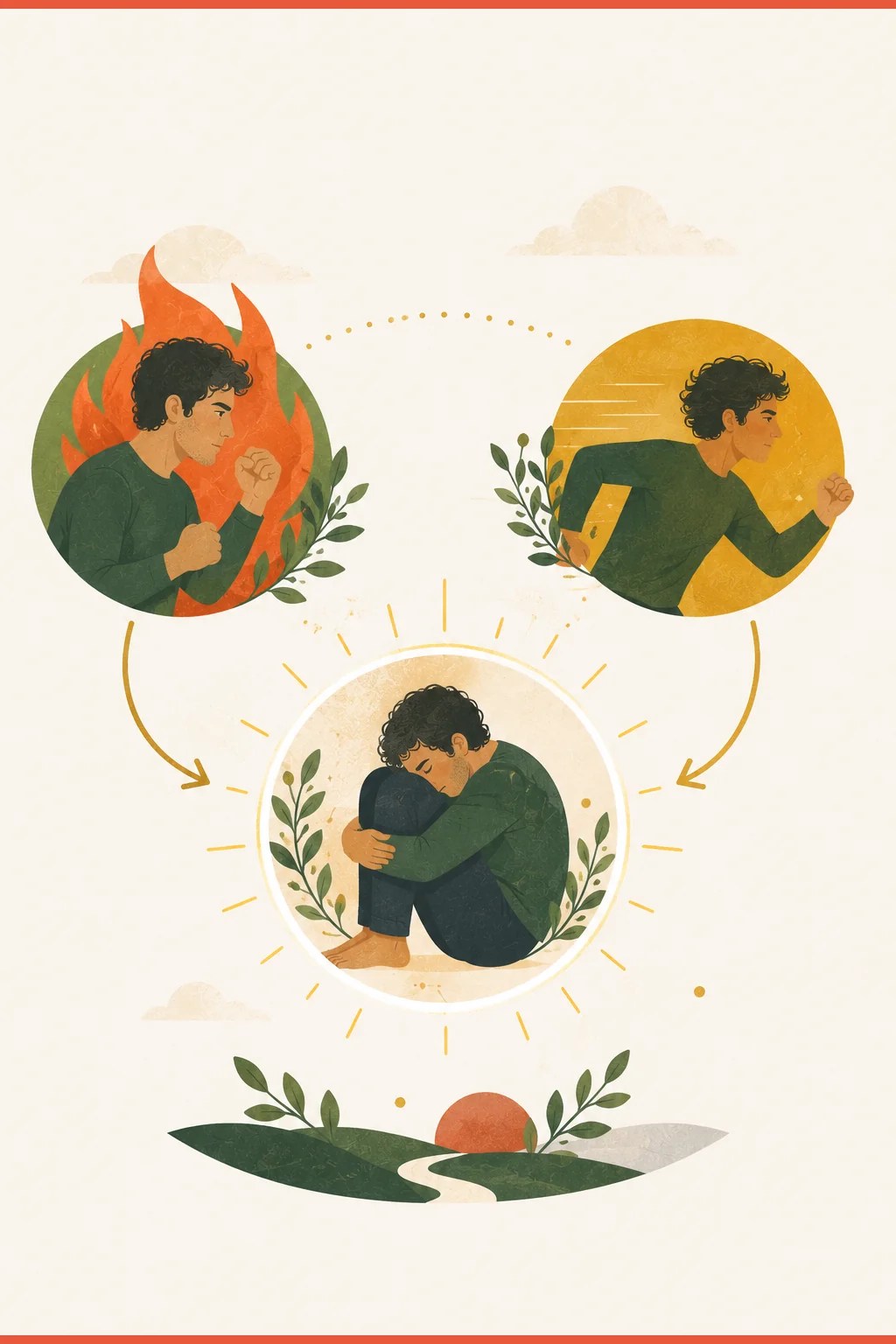
People often ask whether ADHD paralysis and executive dysfunction are the same thing. The cleanest way to say it: paralysis is one of the ways executive dysfunction shows up. Executive dysfunction is the broad umbrella — difficulty with the brain’s management system (planning, initiating, organizing, regulating). ADHD paralysis is a specific, acute episode of that dysfunction: the moment the initiation and regulation systems stall out and you can’t act. So they’re not competing labels; one is the underlying mechanism, the other is the felt experience when it spikes.
ADHD Paralysis vs. Procrastination
This distinction matters, because the two get lumped together and they need different responses. Procrastination is, at its core, avoidance — you put a task off, often unconsciously, to escape the discomfort it brings up, and you typically do something else instead. Paralysis is incapacity — you’re not avoiding by doing something more pleasant; you’re frozen, unable to do the task or anything else, often while staring straight at it.
In practice they overlap and feed each other (avoiding a task lets it grow until it’s overwhelming enough to trigger paralysis), but the tells are different: procrastination has you scrolling or cleaning instead; paralysis has you stuck, doing nothing, distressed. Knowing which one you’re in tells you what to reach for — a motivation/stimulation strategy for procrastination, an overload-reducing strategy for paralysis.
When Paralysis Becomes Shutdown
Paralysis and shutdown sit on the same spectrum of “stuck,” but they’re not identical. Paralysis is a freeze: you’re still present and aware, painfully so, just unable to act. If the overwhelm keeps building and isn’t relieved, it can escalate into a full ADHD shutdown — where the system goes offline entirely and you withdraw, unable to engage with much of anything. Think of it as a dimmer switch rather than a single state: mild paralysis is a stall, deep paralysis tips toward shutdown. Catching yourself early — at the first stall, before the load piles higher — is much easier than climbing out of a full shutdown, which is one reason the small interruptions below work best when you use them at the first sign of freeze.

How to Break Free: Getting Unstuck
Because paralysis is an overload-and-freeze state, the strategies that work all do the same thing — reduce the input until your system can move again. None is a silver bullet, and what helps varies, but these are the reliable starting points:
- Shrink the action to something almost laughably small. Not “clean the kitchen” but “pick up one cup.” A tiny, concrete, physical first step is small enough to slip under the overwhelm and often breaks the freeze.
- Cut the choices. If decision paralysis has you, remove options instead of weighing them — pick the first acceptable one, flip a coin, or use a default rule (“I always do the top item on the list”). Fewer choices, less freeze.
- Brain-dump everything out of your head. Overwhelm paralysis is partly working-memory overload, so empty it onto paper. Seeing it externalized shrinks the “everything, all at once” into a finite, ordered list you can take one item from.
- Move your body first. A small physical action — stand up, stretch, walk to another room, splash water on your face — can interrupt the freeze response and shift your nervous system out of lock-up before you tackle the task itself.
- Use a timer and a “just look at it” rule. Set five minutes and only allow yourself to look at or touch the task — no pressure to finish. Lowering the bar from “do it” to “approach it” often dissolves the wall.
- Reduce sensory and emotional load. Turn off extra noise, dim the screen, close other tabs, and name the feeling (“I’m overwhelmed, not lazy”). Calming the system lowers the overwhelm that’s driving the freeze.
- Body-double or co-regulate. Having another person nearby — working alongside you or just on a call — can settle your nervous system and make the first move feel possible.
- Forgive the freeze. Self-criticism adds emotional load and deepens paralysis; self-compassion lowers it. Treating a frozen moment as a signal of overwhelm (not a character flaw) is often what lets the system thaw.


A practical way to hold all of this: keep a tiny “unfreeze” menu somewhere you’ll see it — three or four of the moves above written on a sticky note — so that in the moment of paralysis, when your thinking brain is offline, you don’t have to decide how to get unstuck (which is its own decision paralysis). You just run the next item on the list. Over time, catching the freeze early and reaching for the same small actions builds a kind of muscle memory that makes the stalls shorter and less frightening.
The throughline: you don’t beat paralysis with force, which only adds pressure to an already-overloaded system. You beat it by making the next step small enough, and the load light enough, that your brain can finally move. And on the days it still wins — because some days it will — that’s information about how overloaded you are, not a verdict on who you are.
When to Seek Professional Help
Occasional paralysis is part of many people’s ADHD. But if it’s frequent and seriously disrupting your work, relationships, or daily functioning — or if it comes with persistent low mood, intense anxiety, or hopelessness — it’s worth talking to a qualified professional.⁴ Frequent paralysis can be part of ADHD, but it can also overlap with anxiety, depression, burnout, and autistic shutdown, and a clinician can help sort out what’s driving it and what will help. If you suspect undiagnosed ADHD beneath a lifelong pattern, an assessment is worthwhile at any age.
Educational content, not medical advice. This article explains the experience of ADHD paralysis and offers general strategies; it is not a diagnosis or a substitute for personalized care. Only a qualified professional can diagnose ADHD. If you’re struggling with your mental health, please consult a qualified provider. If you’re experiencing thoughts of self-harm, please reach out to a professional or a local crisis line right away.
Last reviewed: June 2026 by The ADHD Truth editorial team.
Author: Dr. Morgan Reed, author of You’re Not Broken: The 7-Week Executive Function Workbook for Late-Diagnosed ADHD Adults.
Frequently Asked Questions
What is ADHD paralysis?
ADHD paralysis is a freeze state in which someone with ADHD becomes temporarily unable to start tasks, make decisions, or act, even though they want to. It happens when executive-function demands and emotional overwhelm exceed what the brain can handle in the moment, so it stalls instead of acting. It’s a recognized lived experience (not a formal diagnosis) and usually appears as task paralysis, decision paralysis, or overwhelm paralysis.
Is ADHD paralysis the same as executive dysfunction?
Not exactly — paralysis is one way executive dysfunction shows up. Executive dysfunction is the broad difficulty with the brain’s management system (planning, initiating, organizing, regulating emotions). ADHD paralysis is a specific, acute episode of that: the moment your initiation and regulation systems stall and you can’t move. One is the underlying mechanism; the other is what it feels like when it spikes.
What’s the difference between ADHD paralysis and procrastination?
Procrastination is avoidance — you put a task off, usually to escape the discomfort it brings, and you typically do something else instead. Paralysis is incapacity — you’re frozen and can’t do the task or anything else, often while staring right at it. They overlap and can trigger each other, but procrastination has you doing something more pleasant, while paralysis has you stuck doing nothing and distressed.
How do I get out of ADHD paralysis?
Reduce the load until your brain can move: shrink the next action to something tiny (“pick up one cup”), cut your choices down or use a default, brain-dump everything onto paper to clear working memory, move your body to interrupt the freeze, and lower sensory and emotional load. Self-compassion helps too, because self-criticism adds pressure that deepens the freeze. No single trick works every time — combine a few and keep what helps.
Why do I freeze when I have too much to do?
Because too much at once overloads your working memory and triggers overwhelm. An ADHD brain has less spare bandwidth to hold and sort many tasks, options, and consequences simultaneously, so when everything lands at once it hits capacity and stalls — processing nothing because it’s trying to process everything. The move is to externalize and shrink: get it out of your head and pick one small thing.
Is ADHD paralysis real or just an excuse?
It’s real. It reflects documented differences in ADHD brains around task initiation, working memory, and emotional regulation, plus the body’s freeze response to overwhelm. People in paralysis usually care intensely and are distressed by their inability to act — the opposite of not caring. Dismissing it as an excuse adds shame, which deepens the freeze and makes it harder to get unstuck.
Can anxiety or autism cause similar paralysis?
Yes. Anxiety can produce a similar freeze, and autistic people experience overwhelm-driven shutdowns that overlap with ADHD paralysis, and these conditions frequently co-occur. That overlap is one reason a professional assessment helps when paralysis is frequent — sorting out how much is ADHD, how much is anxiety, and how much is something else guides what will actually help.
When the freeze clamps down hardest around a looming due date, that specific version has its own mechanics — our guide to ADHD deadline paralysis breaks down why time pressure makes starting even harder.
When the not-starting begins with too much arriving at once, why everything feels like too much with ADHD unpacks the overload that can tip into paralysis.
Related reading: ADHD Doom Piles: Why Cleaning Feels Impossible — why the pile keeps rebuilding itself, and 7 ways out.
Paralysis shows up hardest around tasks with no deadline and no audience — if showering and basic self-care are where you freeze, ADHD and self-care explains why those tasks are the heaviest of all.
The scroll is often where paralysis parks you while the real task waits — ADHD and phone addiction explains that default and how to redesign it.
And when the freeze sits between two tasks rather than at the start of one, that’s the switch cost — ADHD and task switching covers that gap.
📚 The ADHD Library by Dr. Morgan Reed
If you’ve spent years frozen and calling yourself lazy for it, the next step isn’t forcing yourself harder — it’s a system built to lower the load so your brain can move.

You’re Not Broken is the workbook I wish I’d had when I was diagnosed — a seven-week executive-function rebuild that pairs practical scaffolding for getting unstuck with the self-compassion to quiet the shame that keeps you frozen.
★★★★★
“It’s not me. It never was.”
Save this. You’ll want to come back to it.
- 📕 You’re Not Broken: The 7-Week Executive Function Workbook for Late-Diagnosed ADHD Adults — the flagship workbook for rebuilding after a late diagnosis.
- 📗 ADHD Mastery for Adults: 3-in-1 — a daily coaching system for the executive-function load.
- 📙 Executive Function Rescue — a nine-week program for overwhelm and emotional regulation.
References
- Volkow, N. D., Wang, G. J., Kollins, S. H., et al. (2009). Evaluating dopamine reward pathway in ADHD: clinical implications. JAMA, 302(10), 1084–1091. Link
- Soler-Gutiérrez, A. M., Pérez-González, J. C., & Mayas, J. (2023). Evidence of emotion dysregulation as a core symptom of adult ADHD: a systematic review. PLOS ONE, 18(1), e0280131. Link
- Iyengar, S. S., & Lepper, M. R. (2000). When choice is demotivating: can one desire too much of a good thing? Journal of Personality and Social Psychology, 79(6), 995–1006. Link
- National Institute of Mental Health (NIMH). Attention-Deficit/Hyperactivity Disorder in Adults: What You Need to Know. Link
- Quinn, P. O., & Madhoo, M. (2014). A review of attention-deficit/hyperactivity disorder in women and girls: uncovering this hidden diagnosis. The Primary Care Companion for CNS Disorders, 16(3). Link
Related Articles
- ADHD and Procrastination: Why You Can’t Start
- ADHD Shutdown: When Your Brain Goes Offline
- ADHD Time Blindness: Why 5 Minutes Feels Like an Hour
- ADHD Burnout: The Crash After Holding It Together
- ADHD in Women: Symptoms, Signs & Why It’s So Often Missed
- ADHD and Forgetfulness: Why You Forget (and It’s Not That You Don’t Care) — when the intention never got recorded in the first place, rather than getting stuck trying to start it.
- ADHD Brain Fog: Why You Can’t Think Straight (and What Actually Helps) — the cognitive cousin of paralysis: when thinking itself feels cloudy or overcrowded rather than when you can’t start.
- ADHD Waiting Mode: Why One Appointment Can Swallow Your Whole Day — why the hours before a fixed event feel unusable, and how to get them back.
As an Amazon Associate, I earn from qualifying purchases — at no extra cost to you. Full disclosure.
Leave a Reply